If you’ve looked up at your roof recently and noticed dark streaks or green-grey, crunchy patches, you’re not alone. It’s one of the most frequent calls we get here in Adelaide, and it usually starts with the same question: my roof was fine two years ago, what happened?
Colorbond steel is strong but not immune to its environment. Shaded roofs, moisture, and airborne spores promote black mould and lichen growth, especially in a climate like ours that swings between hot, dry summers and damp winter spells. The good news is that this is solvable, and it usually doesn’t mean anything is structurally wrong — the roof just needs the right treatment. Tiled roofs face the same problem from moss rather than mould — see our guide to signs your roof needs a soft wash before winter for the warning signs to watch for.
A Quick Story: Sarah’s Roof in the Adelaide Hills
One of our clients, Sarah, contacted us last spring about grime building up on the south-facing side of her roof in the Adelaide Hills. She’d scrubbed a small section with a kitchen brush and diluted bleach, which looked better for a week — then the black spots came back darker, and a few sheets near the gutter line started showing faint brush marks.
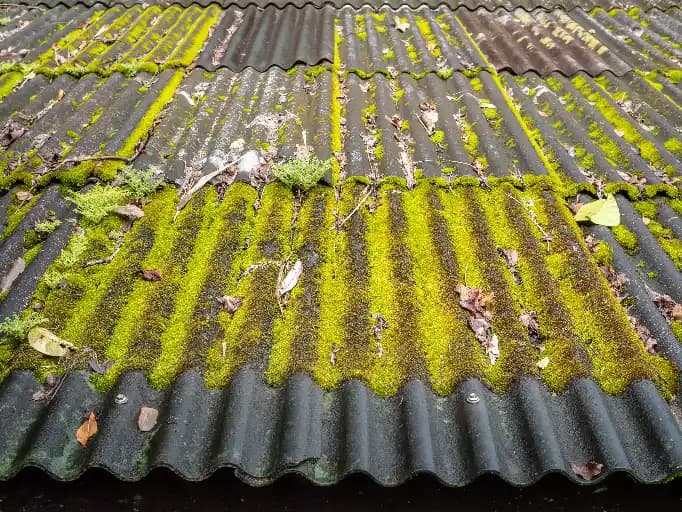
Sarah had two issues at once. The black staining was mould, thriving on a shaded, moist patch of roof rarely hit by direct sun. Closer to the ridge, where tree overhang kept the steel damp for longer, lichen had taken hold — a tougher organism that anchors into the paint layer rather than sitting on top of it. Her scrubbing had scratched the Colorbond coating, leaving those areas more exposed to dirt and quicker to regrow mould.
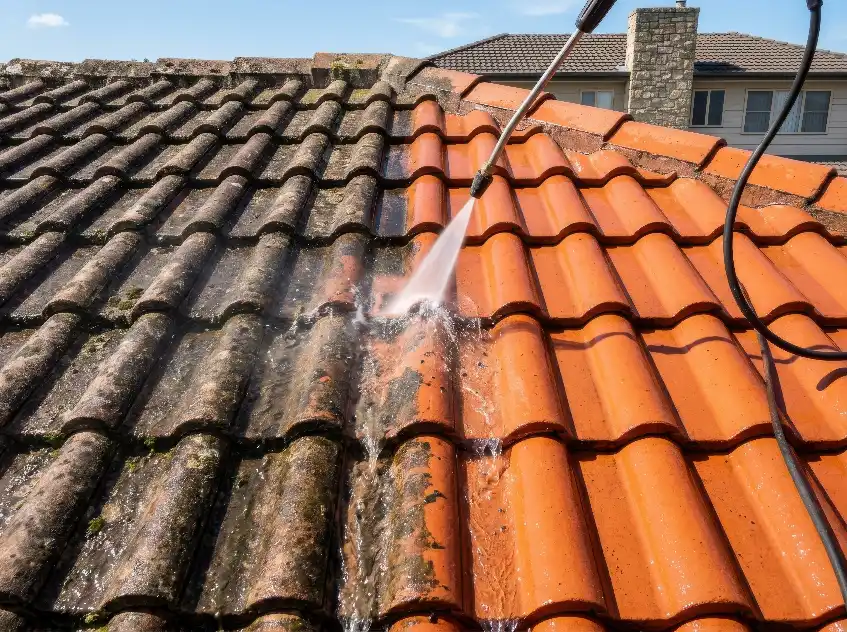
We treated the roof with a gentle roof mould remover using a pH-neutral solution and a low-pressure soft-wash method rather than a pressure wash or scrub. The mould was gone within a day. The lichen needed a second, lighter application two weeks later to remove it fully without harming the paint. Eighteen months on, and with the overhanging branches trimmed back as part of routine property maintenance, her roof is still clean.
What Actually Causes Black Mould and Lichen on Colorbond Roofs?
Dust, pollen, and moisture settle onto Colorbond steel, and once the factory sealant has weathered, the surface becomes friendly to organic growth. A few recurring causes show up again and again in Adelaide homes:
- Poor airflow and shade: roof sections under trees, beside two-storey walls, or facing south stay damp long after rain has stopped, giving mould spores time to take hold.
- Humidity and coastal moisture: roofs near the coast or in low-lying, tree-lined suburbs hold moisture for longer than exposed, inland roofs do.
- Organic material and airborne spores: leaf litter, bird droppings, and dust all provide food once conditions suit growth.
- Aged, weathered paint: years of UV exposure create a fine microtexture that spores can grip onto and establish in.
- Poor drainage: blocked gutters or valleys that pool water above the roofline give mould and algae a constant water source.
Unlike mould, lichen is a joint fungus-algae organism that attaches to the surface rather than resting on it, which makes it far harder to remove. A generic hardware-store spray will usually knock back the surface algae while leaving the lichen’s roots firmly in place. The same confusion often plays out on walls too — see our guide on mould vs mildew for render and cladding.
Why DIY Cleaning Products Usually Backfire
The urge to grab a pressure washer or a stiff broom on a Saturday morning is understandable, but it’s one of the more common ways Adelaide homeowners end up with a bigger problem than they started with.
High water pressure can strip the protective coating off Colorbond sheeting, force water under roofing screws and flashing, and in some cases void the product warranty. Wire brushes and abrasive pads scratch the paint finish, and those scratches attract mould and algae faster next time. Household bleach and strong acidic cleaners can corrode the steel’s protective layer over time, speeding up corrosion in salty coastal air.
Safely Removing Black Mould and Lichen
The right chemical treatment, low pressure, and a proper rinse are the keys to cleaning a Colorbond roof safely. A professional job typically follows this structure:
- Inspection first: checking for loose screws, damaged flashing, or existing issues before any water touches the roof.
- Soft-wash application: a pH-balanced, Colorbond-safe solution that loosens mould without any physical scrubbing.
- Low-pressure rinse: a gentle rinse clears away treated growth and residue instead of blasting the surface.
- Gutters and valleys cleared:this targets the moisture source, not just the visible symptoms — critical for lichen that keeps returning.
- A follow-up treatment: stubborn patches often need a second, lighter application around two weeks later.
Between professional cleans, a garden hose and a soft-bristled roof brush can help on low-pitch, easily reached sections, alongside keeping overhanging branches trimmed back. Anything steeper, more established, or two-storey is best left to a trained roof cleaning crew with the right harnesses and equipment.
Does This Affect the Life of Your Roof?
Black mould left untreated is mostly a cosmetic and air-quality problem. Lichen is more serious — long-term colonies can break down the coating and progressively expose the steel to weathering. With salt air and humidity taking their toll across Adelaide, that’s not a risk worth ignoring for years on end.
A regular clean every 12 to 24 months, depending on how shaded your roof is, usually prevents mould and lichen from establishing in the first place — and it’s far cheaper than tackling an entrenched problem later. Browse our recent roof cleaning results or check whether we cover your suburb before booking.