
One week you’re in a t-shirt cutting the grass, the next you’re watching rain sheet down over the Adelaide Hills. Your roof takes the hardest hit from that swing, and for most people it’s the last part of the house anyone thinks about until water starts coming through. That’s usually when the phone rings first — and by then, the job is bigger and costlier than it needed to be.
Years of exterior house cleaning jobs around Adelaide have taught us one thing: a roof doesn’t fail overnight. There are warning signs, quietly building for months or years, before anything dramatic happens. Here’s what those signs actually look like, why they matter before winter, and why a garden hose or a high-pressure blast won’t fix them.
The Nguyen Family in Modbury
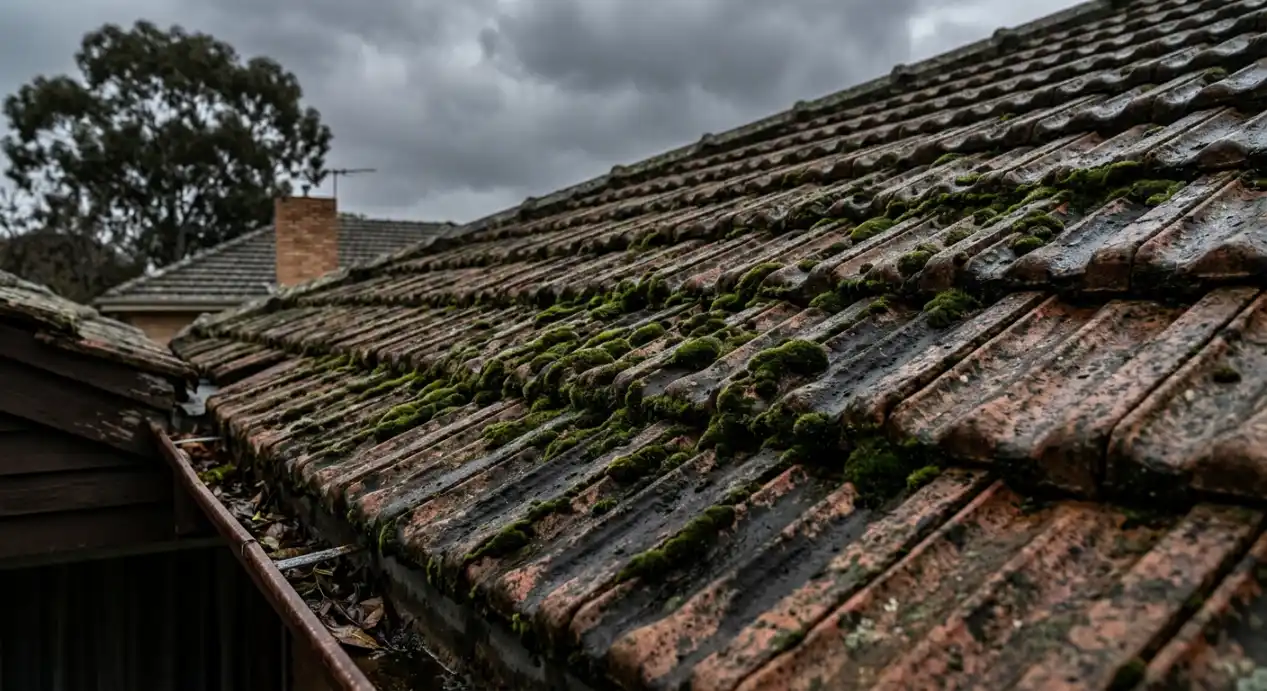
A family in Modbury called us last autumn about a “small leak” near their bathroom ceiling. Up on the roof, things were more serious. Their terracotta tiles were thick with black lichen and moss, especially on the shaded southern side where dim light let it thrive. That moss had been creeping under the tile edges for at least two seasons, lifting them just enough to let water in once the rain came.
The family hadn’t neglected their roof — they simply didn’t know what to look for. No one had told them dark patches on tiles aren’t “roof aging,” but living growth eating into the tile surface. By the time winter rain arrived, that moss had gone from a cleaning issue to a structural one. The same story plays out across Adelaide every year, in a different suburb with a different tile colour — and it’s almost always preventable.
Why Timing Before Winter Matters
Adelaide’s wet season sends far more water over your roof, far faster, than any other time of year. If moss, algae, or built-up dirt is already sitting there when that rain hits, you’re not just dealing with dirt — you’re dealing with a roof that holds water instead of shedding it. Moss acts like a sponge: it soaks up rain, stays damp for days, and presses moisture against the tile or metal underneath long after the sun’s come back out.
Clean the roof before the wet season soaks in, and the surface gets the chance to dry and shed water the way it was designed to. It also surfaces small problems early — a loose or cracked tile hidden under moss becomes obvious once it’s exposed, instead of turning into a leak once the cold sets in.
The Signs Your Roof Needs a Soft Wash
Most of these signs are visible from the ground once you know where to look. Grab a coffee, step back from the house, and check the roofline for: dark streaks running down from the ridge or valleys, usually algae that spreads fast after cool, wet weather; green or grey-green moss patches in shaded or southerly areas, the same spots that stay damp through winter; fuzzy, raised growth between or along tile edges, meaning moss has moved past the surface and started lifting material underneath; chalky, faded, or unevenly coloured tiles, a sign the sealant is breaking down and the tile is absorbing more moisture than it should; debris built up in roof valleys or around vents, letting water pool and accelerating decay; gutters overflowing in light rain, usually from moss and roof debris washing down and blocking the downpipe; and a musty smell in the roof space or upper rooms, a clue that moisture has already spread beyond the roof itself. Spot two or three of these and it’s worth a proper look now — the wet months are on their way.
Why Not Just Pressure Wash It?
This is where most DIY attempts go wrong. A high-pressure hose sounds like the quick fix, but on a roof it can crack tiles, strip the protective coating off the surface, and force water under the tiles instead of off them — especially on tile and colorbond roofs. We’ve been called out more than once to fix damage that started with a “quick” hired pressure washer.
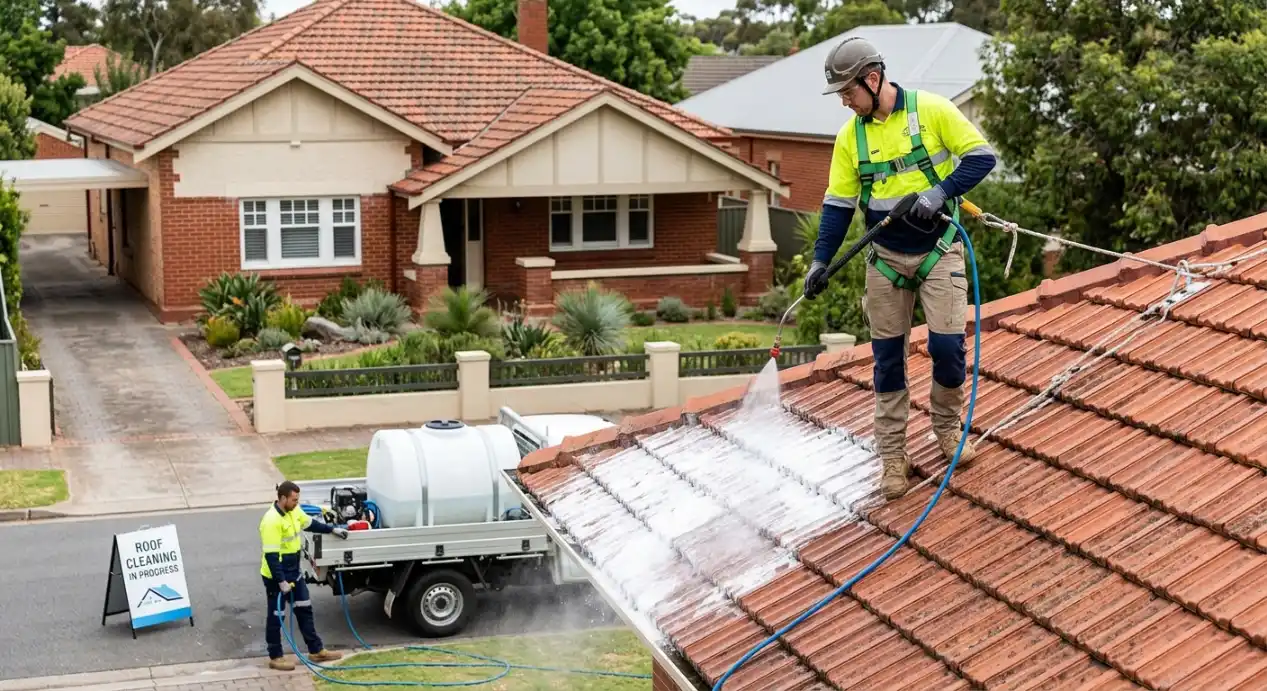
Soft washing uses low pressure and a purpose-built cleaning solution that works into moss, lichen, and algae, loosens the roots, and lifts it away — followed by a gentle rinse that leaves the roof clean without cracked tiles, torn fixtures, or water forced where it shouldn’t go. It’s a slower process, but one that actually protects the roof instead of just making it look clean for a few weeks before the growth returns.
What Proper Roof Moss Removal Actually Involves
Proper roof moss removal isn’t just scrubbing off what’s visible. Moss grows root-like rhizoids into the porous roofing material itself, so surface-level scrubbing won’t stop it returning within six months. A full job covers an inspection to gauge how far the moss and lichen have spread and whether tiles have lifted or cracked underneath; a soft-wash treatment that kills moss and algae at the root, not just discolours it; a low-pressure rinse to clear the dislodged growth without breaking the tile seal; a check of the gutters and downpipes, since moss and grit usually collect there too; and, where the roof stays in shade for most of the day, an optional protective treatment to slow regrowth. Skip these steps and it’s no surprise moss “comes back fast” after a rushed or cut-price clean.
Maintenance Is Cheaper Than Repair
We tell almost every client the same thing, because it’s always true: roof maintenance costs far less than roof repair. A soft wash deals with the surface problem before it becomes a structural one. Left unmanaged, trapped moisture from moss can lead to cracked or lifted tiles letting water into the roof space, rust on metal fasteners, flashing or colorbond sheeting, staining on timber roof framing, mould developing in the ceiling cavity, and a shorter lifespan for the roofing system as a whole. None of that happens overnight — it builds quietly, just like it did for the Nguyen family, until the wet season makes it impossible to ignore.
Not Just the Roof
Roof cleaning Adelaide homeowners book is usually only part of the picture. The same moss, dirt, and organic matter builds up in gutters, on driveways, and along exterior walls, and it only gets worse once regular rain sets in. Handle the roof and the rest of the exterior together and you’ve covered the whole home before winter, not just one part of it.
If your roof is showing any of the signs above, don’t wait for a damp ceiling to make the decision for you. Get in touch with our Adelaide team for a straightforward roof inspection and soft wash before winter sets in.