
Simply spin up the dial, smash the surface with the brush, and watch the dirt fall off, right? Not always. It is true that for many of the surfaces in and around an Australian house, a high PSI can be detrimental to them. That's where low-pressure cleaning really shines, and why it's important to know just what the difference is between soft wash vs pressure wash methods when hiring someone.
High-pressure water is used to physically remove dirt from a surface by means of force, i.e., according to the shape of the water. Low-pressure cleaning employs a chemically active and thoroughly formulated solution that is biodegradable to dissolve the dirt, mould, algae, etc. without touching the items, after which it is gently rinsed off. This is the more conservative of the two processes and is typically the better one for painted surfaces, render, roofing and older homes without the risk of damaging the surface like high-pressure jets.
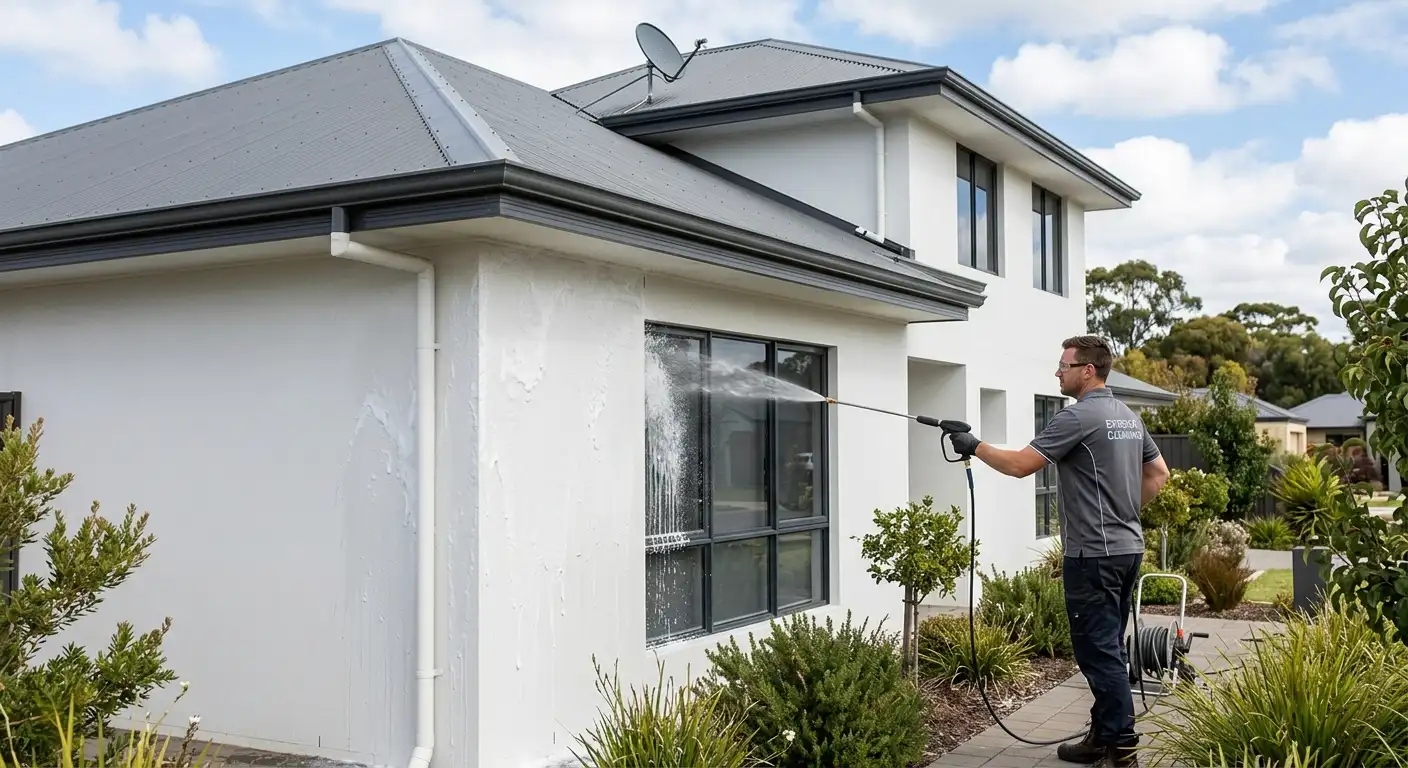
A Real Client Story: The Bennetts in Unley
A few months ago, we got a call to a charming Unley style home. The owners (Bennetts) had attempted to deal with their render walls and Colorbond roof with a hired pressure washer. The driveway was installed in great condition. The render didn't, though.
They only had patchy and faded paint where the water jet had cut through the top coats of paint, and a few hairline cracks along old mortar joints that had not been present earlier. Roof decks had become uncovered by pressure in a few decks, and some work was needed to repaint them before the time was right.
Looking at this property, our team immediately realized that there was a problem at hand, something that concrete problems are not. They sat on a painted or coated surface, overlaid with organic growth (mould, algae and lichen). Cleanliness does not depend on the pressure! It just clears whatever it is that's returning, including coating.
We performed a proper soft wash cleaning treatment of the walls and roof with a treatment conducive to the breakdown and removal of the biological growth and then rinsed at low pressure. No more damage, no peeling paint, and mold didn't report back for months. This job is a pretty good reflection of why we are asked nearly every week, “Why do I need to do a soft wash vs a pressure wash?”
Understanding What Low-Pressure Cleaning Does
Low-pressure cleaning is NOT “gentle for the sake of being gentle.” It is a deliberate technique, specially designed for the kind of dirt. The process is a non-mechanical application of a cleaning agent using low pressure to extricate the organic contaminants directly.
Unlike many products, the solution targets the root of mould problem areas by breaking down the cell structure of mould, algae, moss and lichen. This is a significant difference as stains and black streaks will appear again in weeks after only attempting surface cleaning, without attacking what's growing beneath the surface. A good low-pressure treatment further prevents that speed of regrowth, making it ideal for roofs and painted exteriors in particular.
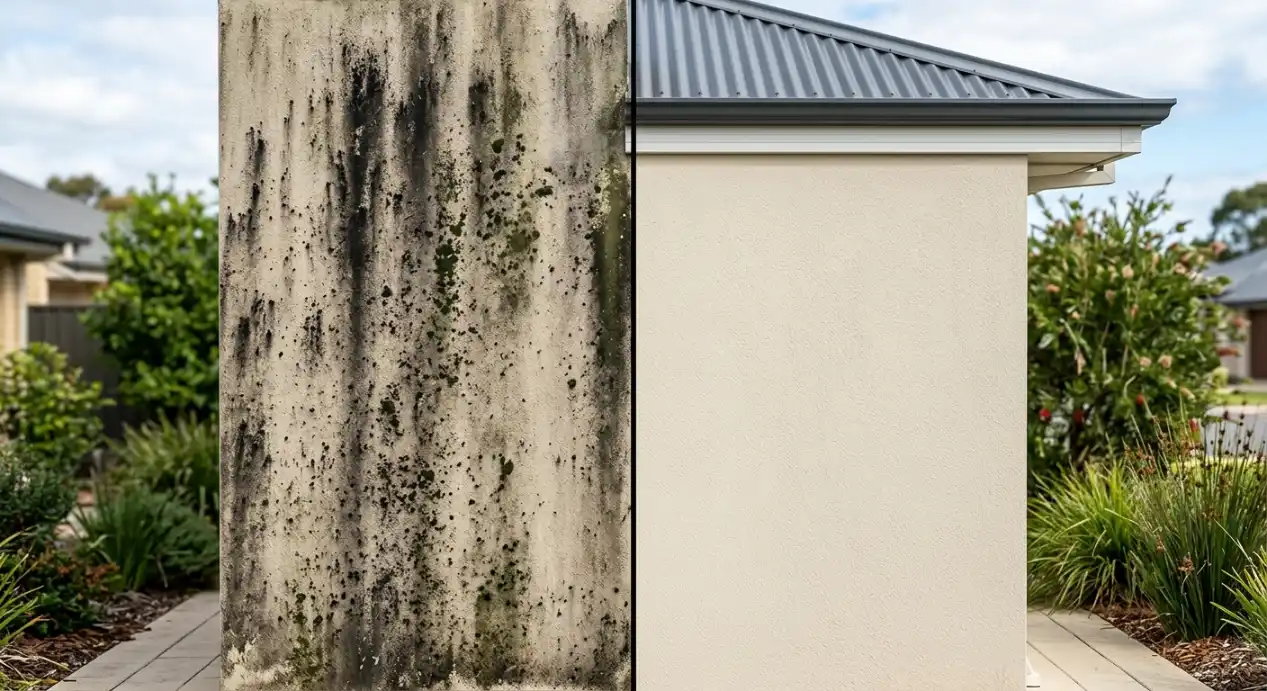
Where Low Pressure Cleaning Outperforms High Pressure
While it is rarely the best answer, there is a time and place for low pressure, and it's not simply because it's less safe but slower. From our experience, it is easier for it to win when:
- It has a surface layer of paint, render or other protection that will be removed or streaked by high pressure.
- You have a Colorbond, tiled or metal roof that requires high-pressure jets to lift sealant, pop up tiles or push water under roof panels.
- Mortar is worn or broken, render is cracked, the weatherboard in the building is very old and may only withstand small or indirect forces.
- Growth (mould, algae, lichen) and not soiled dirt or oil is the problem.
- You want the effect to last, not just look clean for a couple of weeks after, then grow back.
Weatherboard houses are often used in older suburb parts of Adelaide, and low-pressure house washing is an ideal treatment for them. The amount of energy a regular pressure washing machine can generate is enough to ruin these homes' timber and paint layers, much less at the lowest pressure setting.
Capable of Handling High Pressure? High Pressure Just Makes Sense?
High pressure cleaning makes sense for most soap-covered surfaces, but that doesn't mean that it is the right technique for every surface to be clean. Concrete driveways, paved paths, and hard surfaces with no paint are normally more responsive to higher pressures, as they can not be damaged by the direct pressure and often require this pressure to lift the years of compacted dirt, tire prints, or oil that has settled in.
Picking the right method for a given material is the key point, rather than using whatever ‘setting’ you think is ‘doing more’.
A Process Description of How to Decide Which Method to Use
When we quote a job, we're not merely taking into account the filth on the surface, but we're considering the type of surface, and the ways in which it will react to different cleaning forces. It's a decision that's helped by a few questions:
- Is the surface coated, painted, or uncovered? Soft wash techniques are almost always used for coated surfaces.
- What's causing the discoloration? It takes a chemical treatment, rather than force, to enable organic growth.
- Is the material old or worn? High-impact subjects are not as well tolerated on old surfaces.
If it is done correctly on the first try, the result will provide a clean bill of health; if not on the first try, it will come with an unexpected repaint bill.
Not sure which method your property actually needs? Take a look at our Adelaide service areas or browse our completed soft wash jobs to see the difference the right method makes.