
For most Adelaide lawns, weekly mowing during spring and summer keeps grass healthier, because it removes only a small amount of leaf each cut and encourages dense, even growth. Fortnightly mowing works better in autumn and winter, when grass grows slowly and cutting too often adds unnecessary stress. The right lawn mowing schedule isn’t fixed — it should shift with the season, the grass type, and how the lawn is actually growing.
Why the Mowing Debate Isn’t as Simple as “Pick One”
Search “Lawn Mowing Adelaide,” and you’ll find plenty of opinions, but very few straight answers. That’s because there isn’t one correct interval that suits every lawn, every month, all year round. A couch lawn in full summer growth behaves completely differently to the same lawn in the middle of a cool, dry July. Treating both the same way is where many lawn problems actually start.
We’ve mowed lawns across Adelaide’s suburbs for over a decade, and the pattern is consistent. Lawns that struggle usually aren’t under-watered or poorly fed — they’re mowed on the wrong schedule for the season they’re in. Getting the interval right matters more than almost any other single decision in Healthy Lawn Care.

A Real Adelaide Story: Craig’s Lawn in Golden Grove
Last spring, a homeowner in Golden Grove — we’ll call him Craig — called us frustrated. His front lawn had gone patchy, with bare thinning strips near the driveway and thick clumpy growth everywhere else. He’d been mowing fortnightly all year, thinking less mowing meant less stress on the grass.
The problem was timing, not effort. Through spring and early summer, his couch grass was growing fast enough that a fortnightly cut meant removing almost a third of the leaf blade in one pass. That’s a shock to any lawn — it strips away the plant’s ability to photosynthesize properly and pushes it into recovery mode instead of steady growth. Meanwhile, thatch was building up in patches he wasn’t mowing often enough to keep even.
We moved Craig to weekly lawn mowing through the growing months and back to a fortnightly lawn mowing rhythm once autumn slowed things down. Within six weeks, the bare strips had filled in, the color had evened out, and the lawn had started holding its stripe pattern between visits. Nothing else changed — same watering, same fertilizer. Just the right schedule for the season.
The One-Third Rule: The Real Science Behind Mowing Frequency
Most turf agronomists point to the same guiding principle, often called the one-third rule: never remove more than a third of the grass blade’s height in a single cut. Go beyond that, and the lawn diverts energy toward repairing leaf damage rather than building root strength, leaving it thinner and more vulnerable to weeds, drought, and disease over time.
This is really what decides whether weekly or fortnightly suits a lawn, not a fixed calendar rule:
- Fast growth periods(spring, early summer, after rain): grass can gain 3–5cm or more between cuts, so a fortnightly gap often breaks the one-third rule easily. Weekly mowing keeps each cut light and low-stress.
- Slow growth periods (winter, dry late summer): growth may add only a centimeter or two over two weeks, so fortnightly mowing comfortably stays within the one-third rule and avoids unnecessary scalping.
- Grass type matters too: couch and kikuyu are vigorous growers that usually need weekly attention in season, while fescue and some cool-season blends tolerate a longer gap more easily.
Weekly Mowing: The Benefits and the Trade-Offs
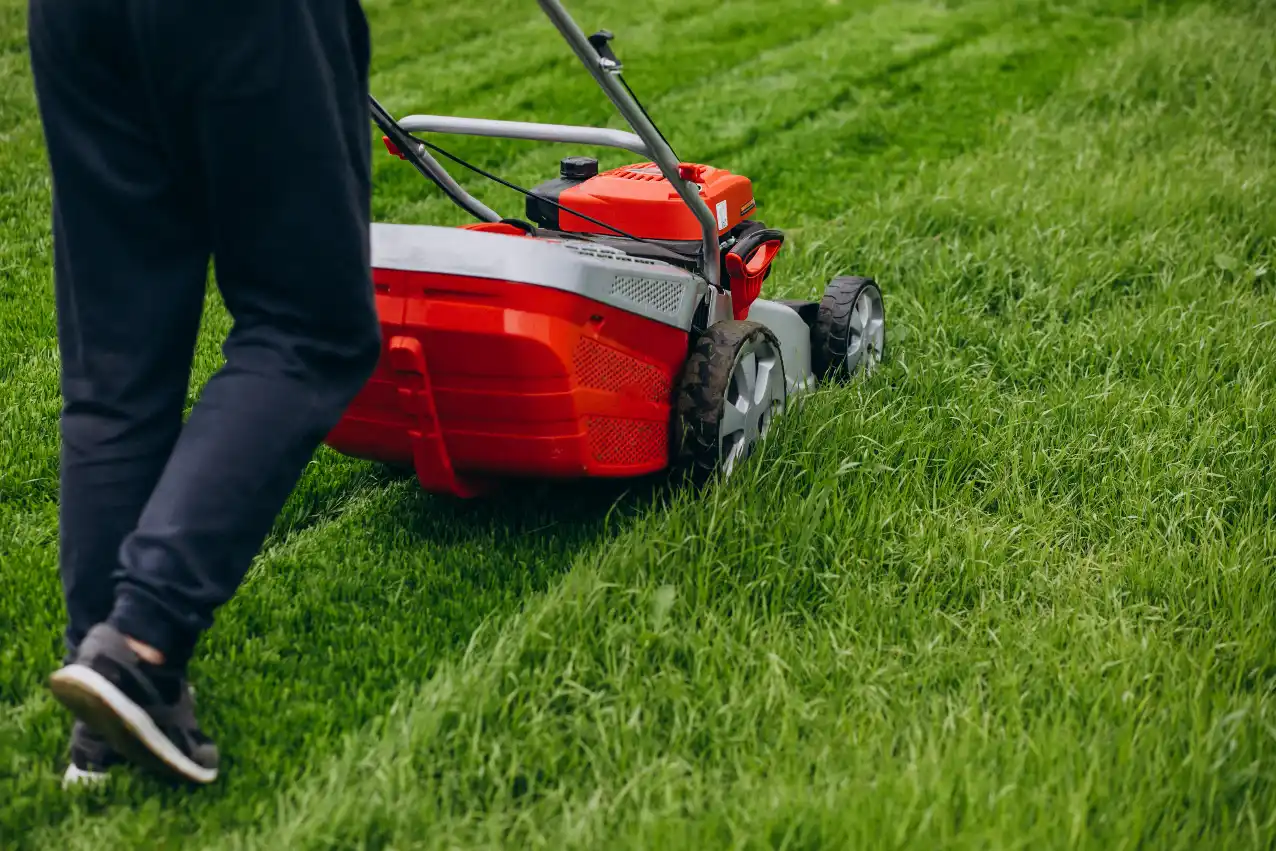
Weekly mowing tends to produce a denser, more even lawn because grass is never cut back hard enough to shock it. It also keeps clippings shorter, which means they break down faster and return nutrients to the soil instead of smothering the grass underneath.
The trade-off is cost and time. A weekly lawn mowing schedule means more visits, more fuel, and more of your Saturday morning — which is exactly why most of our Adelaide clients hand this over to a professional crew during the peak growing months and step back to fortnightly once things slow down.
Fortnightly Mowing: When It Works Well
Fortnightly mowing is perfectly healthy for a lawn during slower growth periods, and it’s the more practical, budget-friendly option for a lot of households year-round. The risk only shows up when fortnightly is used blindly through the fast-growing months, letting the grass get away between visits and forcing a harder cut than the lawn can comfortably handle.
If fortnightly is the only schedule that suits your budget or time, that’s completely workable — the fix is simply to raise the mower height slightly during peak growth so each cut still respects the one-third rule, even with a longer gap.
How to Choose the Right Schedule for Your Lawn
A good rule of thumb for Adelaide’s climate:
- September to March (spring/summer): weekly mowing keeps most lawns healthiest and prevents the scalping that comes with letting growth get ahead of you.
- April to August (autumn/winter): fortnightly mowing is usually sufficient, since growth slows right down.
- After heavy rain or fertilizing: expect a temporary growth spurt and adjust the interval accordingly, rather than sticking rigidly to the calendar.
Watching the lawn itself, rather than the date, is ultimately the most reliable guide. If it’s noticeably taller and starting to flop over between visits, it’s telling you the interval needs shortening.
Our Approach to Lawn Mowing Adelaide-Wide
We adjust our clients’ schedules with the seasons rather than locking everyone into one fixed plan year-round, because that’s what actually keeps a lawn in good condition. Our crews cover the CBD, eastern suburbs, northern suburbs and the Hills, and every visit includes edging and clipping removal so the lawn doesn’t just get shorter — it gets healthier.
If your lawn is looking patchy, thin, or tired no matter how often it’s cut, the schedule is often the missing piece, not the effort — though sometimes it’s the grass itself; see our guide to buffalo, couch and kikuyu grass for Adelaide. Mowing is only one part of keeping a property in shape — our seasonal maintenance checklist covers the rest, and pairs well with our wider property maintenance services. Browse our full range of outdoor care services or book a free quote to get your lawn on the right schedule.