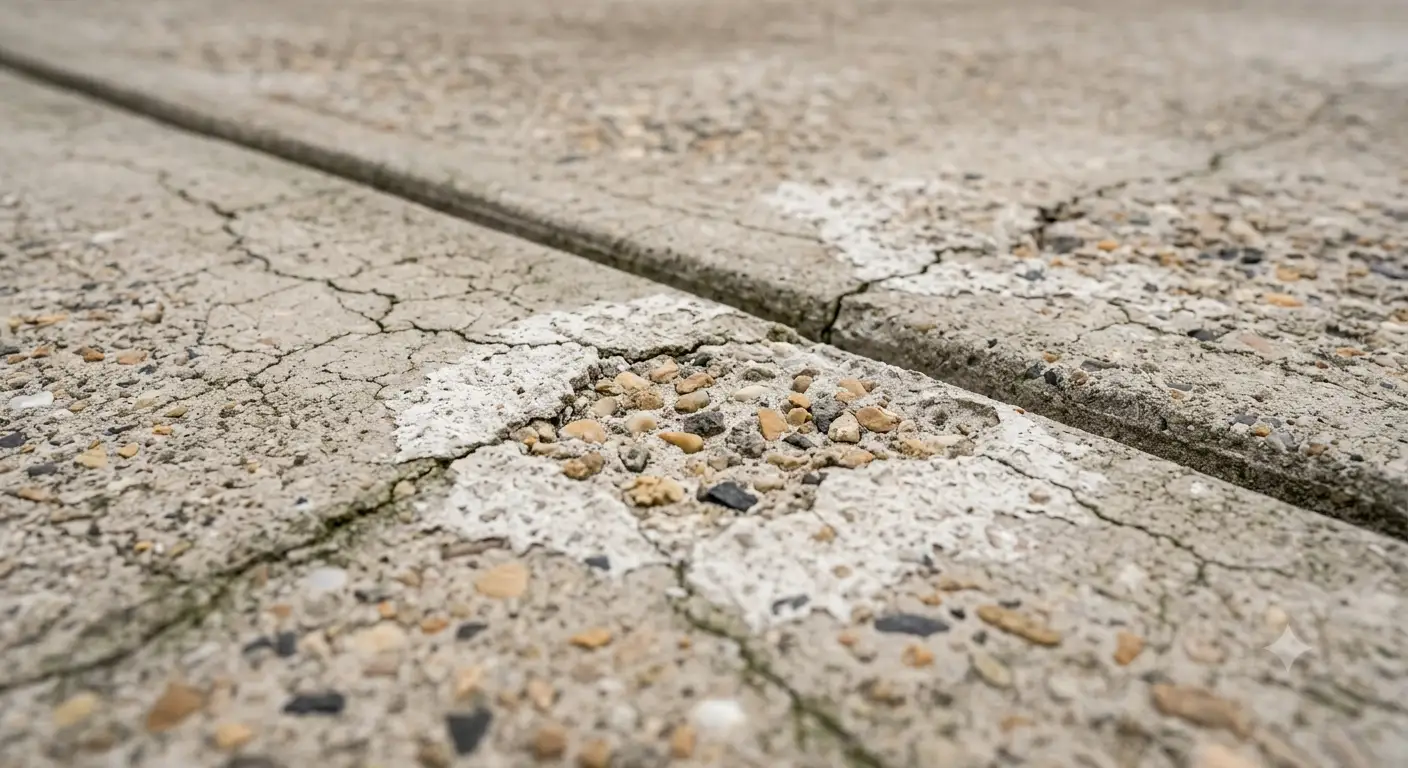
Cracked, flaking, or over 20–30 year old concrete is more susceptible, as water under pressure can permeate these cracks and seep through, spalling off the compromised top layer and expanding cracks. With appropriate equipment and pressure levels, and the expertise of someone who does it right, concrete pressure cleaning can be completely safe and, as a best practice, may be the most effective solution to a faded-out driveway or path.
The Driveway Marcus Almost Ruined Himself
The story of Marcus, a Burnside homeowner who rented a petrol pressure washer last summer from a hardware shop to clear a twelve-year accumulation of oil stains and black mould on his driveway, is a real one, and he’s not alone in finding they were no picnic. After about 10 minutes, he had turned to carved-out pale striped marks in the surface on which the nozzle was too close, and the punctured hole around the base of the garage door had expanded into a hairline crack that he could slot a coin into.
When he called, we weren’t just faced with dirt, we were concerned that the whole slab needed replacing. The good news? It didn’t. After evaluating the concrete, the etching was cosmetic, and the crack was a pressure crack and not a structural crack. We tweaked our pressure, implemented a surface cleaner attachment to maintain a consistent distance between the wand and the driveway, and brought the driveway back to its freshly poured appearance. This is a very common error and is why we are asked this question: “Can you pressure wash concrete?” on a weekly basis.
How Pressure Washing Damages Concrete
Concrete is porous, and after many years of curing, sealing, and weathering, a thin and hard concrete surface layer is created. The PSI of standard household or commercial pressure washers can be between 1500 and 4,000+, and this protective layer is easily removed at close range or from a nozzle that is not suitable. When a pressure washer concrete damage problem really does take place, it occurs as a result of poorly estimated technique — not the water. Damage can occur most often in the following ways: pressing the wand too closely to the surface in a small area; using a 0° pinpoint nozzle instead of a wider one better suited to concrete surface cleaning; working in straight, uneven passes that leave behind a zebra stripe imprint; failing to prevent water from entering existing cracks, where it can freeze and lift the base below the slab; and cleaning already-crumbling or unsealed concrete at very high pressure without reducing it first.
It does not mean that you shouldn’t clean your concrete at all. Cracking, blistering, and other long-term effects resulting from dirt, moss, and algae accumulation on the surface far outweigh any benefit from a well-done job of cleaning.
Signs Your Concrete May Be at Risk
It is helpful to have some knowledge of what to look for prior to any actual projects of pressure cleaning on concrete. If any of the following apply, it’s better to get them assessed rather than blasting right in with a rented machine: visible hairline fissures, particularly at joints or edges; a chalky, crumbling, or flaking surface from spalling; exposed aggregate — small stones showing through a worn-off surface layer; a matting or footpath surface that has turned discoloured or sandy underfoot; or concrete that is over 25–30 years old and has never been sealed, or hasn’t been sealed in the last 10 years.
If two or more of the above apply, don’t assume a concrete surface is beyond help. In most residential concrete clean-up work, we simply reduce pressure, change the fan tip, and increase our distance from the surface. If the concrete is genuinely fragile, and nothing else will work, a soft wash method may be necessary instead, applying chemical treatments to lift dirt with less pressure or none at all.
How to Clean Concrete Without Damaging It
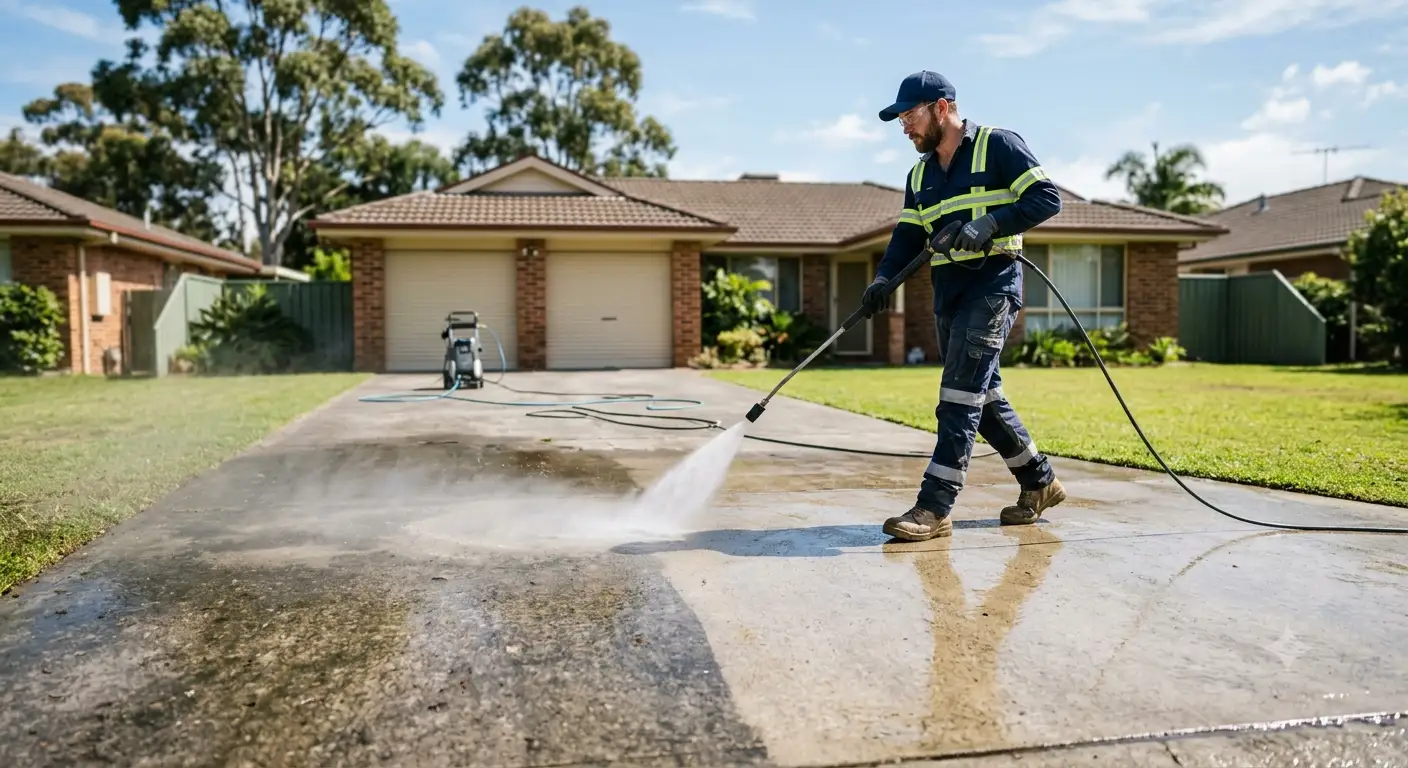
There are several factors that can be adjusted for safe concrete surface cleaning, but the process isn’t much more complicated than one rule. Pressure and distance matter more than many realise — the farther the water is from the surface, and the wider the fan nozzle, the more it spreads out and the less force it carries per square inch. Slow, overlapping passes avoid the uneven etching that catches so many driveways out.
The part most people miss is sealing after. A quality concrete sealer closes the pores, cuts the chance of staining, stops water from entering the aggregate, and prolongs the life of the surface — a small extra step that pays off many times over on an older driveway.
Why Professional Assessment Matters
All slabs are unique, and a driveway installed in 1995 has no resemblance to one poured last year. That is the essence of this question: pressure washing will not break up concrete, but if it is weak, it makes destructive consequences more likely. Years of working through slabs across Adelaide properties — from courtyards next to the beach to driveways that have seen decades of weathering — means we know within a minute or two whether a surface needs a gentle touch or can take full pressure.
Cleaning a driveway seems like such a straightforward job. But it’s a fair thing to worry about when you’re looking at a stained, mossed, or ageing slab and wondering whether it’s hard enough to take a clean. If you’re also weighing up who should handle the job, our guide on hiring a pressure washing company covers what to check before you book anyone in, and our notes on water and chemical runoff explain how a responsible clean protects gardens and drains too. And if you’re wondering how often an older slab should be booked in, see our guide on how often a driveway should be pressure washed.
Not sure if your driveway can handle a full clean? Adelaide Pressure Washing & Lawn Mowing has been restoring driveways, paths, and patios across Adelaide for over 10 years, with the right equipment and eye to know when to go easy. Get a free, no-obligation quote or call +61 415 277 399.